

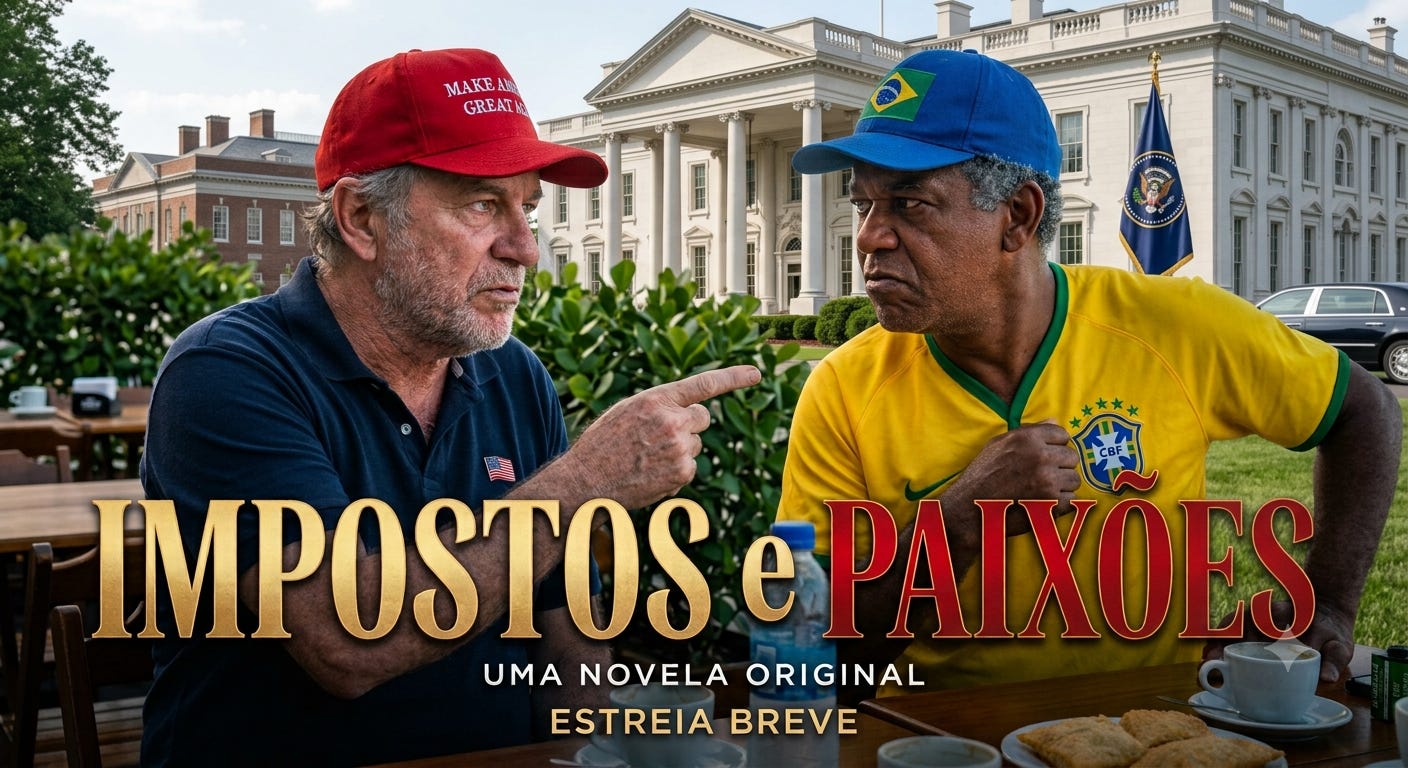
US–Brazil: “Impostos e Paixões*” Enters Its Second Season
The narrative of a beleaguered “bromance” between Trump and Bolsonaro appears to be fading behind a proxy battle to safeguard US payment giants, Visa and Mastercard, against the surge of Pix.

Flashback to 2025
At first glance, trade relations between the United States and Brazil are heavily shaped by structural political differences. President Trump’s unwavering support for former President Bolsonaro and his family adds a layer of friction to an already complex dynamic.
It was - rhetorically, at least - in the name of this friendship that the White House issued an Executive Order on July 30, 2025, imposing a 40% tariff surcharge under national emergency powers (IEEPA). “The Government of Brazil’s treatment of former President Bolsonaro … contributes to the deliberate breakdown in the rule of law in Brazil, to politically motivated intimidation in that country, and to human rights abuses,” the decree stated. Washington cited growing concerns over institutional threats that could undermine “the ability of Brazil to hold a free and fair election of the presidency in 2026” (general elections are scheduled in Brazil for October 2026, Ed.).
Concurrently, on July 15, 2025 - just three days prior to Jair Bolsonaro’s first conviction - the USTR (Office of the United States Trade Representative) launched the investigation that has recently served as the legal basis for the initial salvo of tariffs under Section 301 (see below).
However, rising domestic inflation soon disrupted this script. By November 2025, the Trump administration executed a U-turn, granting exemptions on a selection of targeted goods.
The 2026 Escalation
The latest chapter in this saga centers on Eduardo Bolsonaro. Sentenced in June 2026 by Brazil’s Supreme Court to four years in prison for coercion, the third son of the clan was recently granted a US Green Card, effectively shielding him from extradition. Having resided on American soil for over a year, the former lawmaker operates as the family’s primary envoy in Washington, driving the clan’s diplomatic push while President Trump has thrown his weight behind another son, Senator Flávio Bolsonaro, in his bid for the Brazilian presidency.
For the second consecutive year, trade remains the primary friction point. Effective July 22, 2026, a 25% tariff on Brazilian imports under Section 301 was enacted to penalize the rollout - underway since 2020 - of an instant payment network operated by Brazil’s central bank. A report published on July 15, 2026, made explicit claims: “Brazil has unfairly disadvantaged U.S. companies engaged in competing electronic payment services, including by policies that favor its national champion, Pix.”
Washington is accelerating its offensive: on July 24, a fresh USTR probe focusing on forced labor tacked on an additional 12.5% in duties.
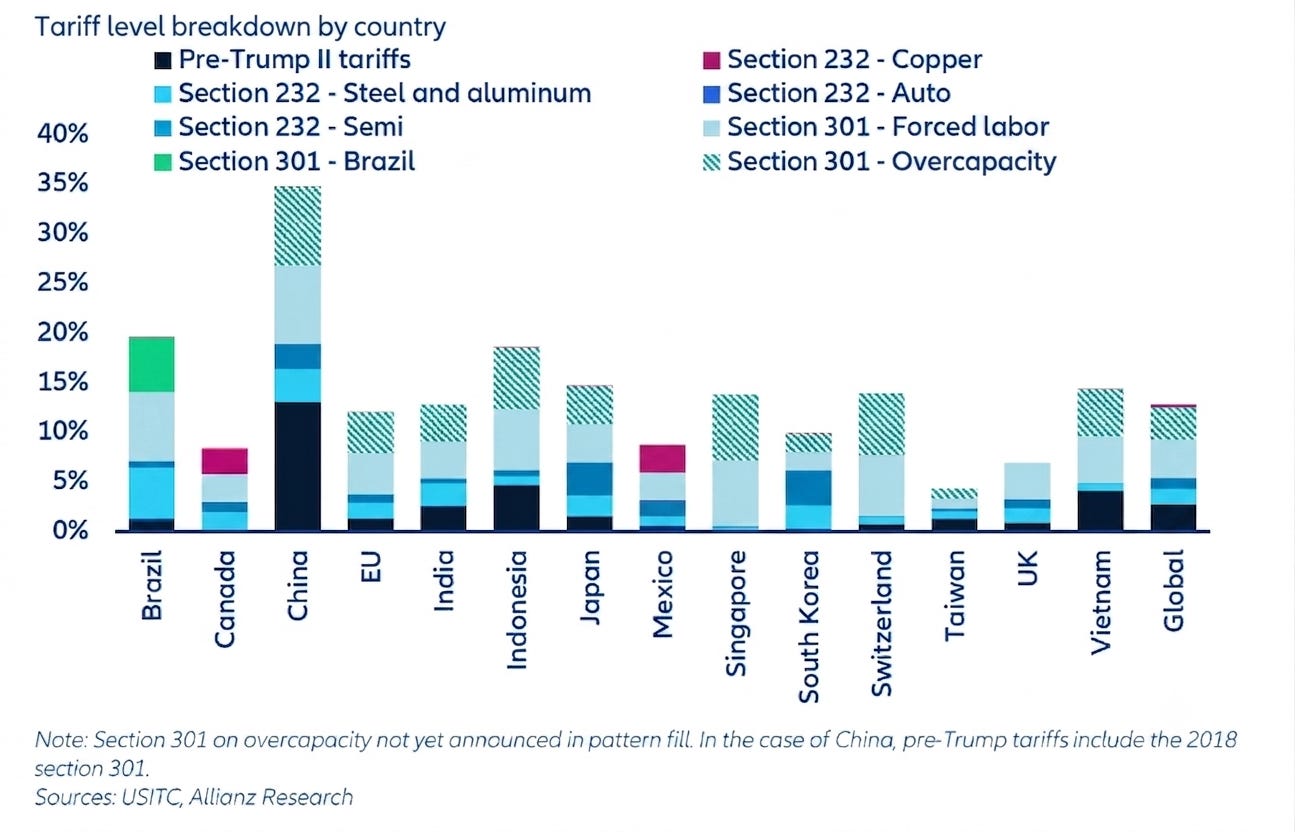
Brazilian imports now face an average effective tariff rate of 20%, positioning Brazil as the second most heavily taxed nation by the US after China. “While lawful under US law, the new tariffs will continue to be the subject of intense sectoral negotiations between Brazil and the United States,” noted the Peterson Institute for International Economics (PIIE).
Brazilian Resistance Meets American Constraints
Lula remains undeterred. Both in 2025 and 2026, Brazil chose to dismiss US pressure. “No one is going to change our Pix,” Lula posted on social media. “It’s public, it’s free, and it will stay that way.” The Economic Reciprocal Action Act, passed in 2025, provides the government with broad leverage to deploy non-tariff retaliatory measures.
Yet, the latest US measures reflect lessons learned from the November 2025 retreat: Washington was forced to carve out exemptions for nearly 44% of Brazilian exports, including staples like orange juice and coffee. With the US midterm elections looming, safeguarding household purchasing power has become virtually sacred.
For further reading - “The forced labor case against Brazil is not about forced labor”, Monica de Bolle, PIIE, July 23, 2026
* “Taxes and Passions” — any resemblance to an actual telenovela is purely coincidental!