

The US Puts the IMF Under Pressure
The US policy aimed at unraveling the programs designed to finance the fight against climate change is not limited to the domestic stage. This re-evaluation of priorities extends to the IMF as well.

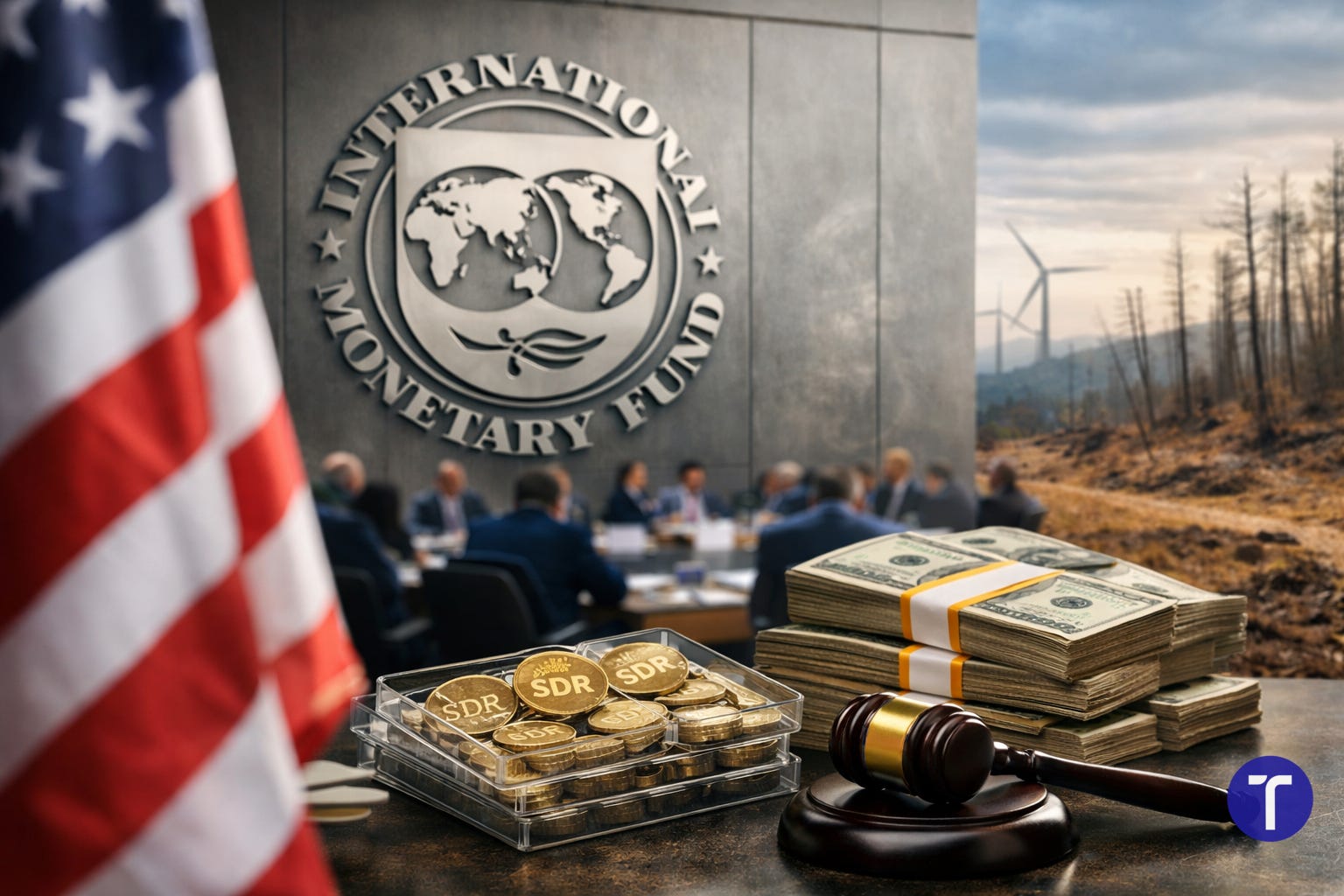
It may appear to be an innocuous technicality at first glance. However, a close study of the Treasury’s quarterly reports on U.S. voting policy within the International Monetary Fund (IMF) is telling: since February 2025 and the inauguration of Donald Trump, the United States has consistently abstained or voted against most programs involving financing eligible for the Resilience and Sustainability Trust (RST) - the instrument designed to extend the IMF’s mandate toward long-term structural risks.
While this strategy has no immediate effect on final approvals - a qualified majority is the required threshold in this context - it serves as a persistent signal to the Board. Vote after vote, it underscores the U.S. determination to pivot the IMF’s strategy back toward what it deems its “original mandate.”
A Consistent Political Line
The tone was set on Inauguration Day. Executive Order 14169, titled “Reevaluating and Realigning United States Foreign Aid,” signed on January 20, 2025, mandated the Treasury Secretary to conduct a comprehensive review of U.S. commitments within International Financial Institutions (IFIs).
While the decree did not explicitly name the IMF or the World Bank, it served as a prelude to the hardline stances that defined 2025. “Now I know “sustainability” is a popular term around here. But I’m not talking about climate change or carbon footprints. I’m talking about economic and financial sustainability—the kind of sustainability that raises standards of living and keeps markets afloat. International financial institutions must be singularly focused on upholding this kind of sustainability if they are to succeed in their missions,” declared Scott Bessent before the Institute of International Finance (IIF) on April 23, 2025. He further argued that the IMF devotes “disproportionate time and resources to work on climate change, gender, and social issues.”
The Treasury Secretary reiterated these grievances the following day at the IMF-World Bank Spring Meetings, accusing the Fund of losing sight of the “core macroeconomic issues it was created to address.”
Washington views the IMF as a key pillar of American influence. Consequently, the current dynamic is one of redefinition rather than retreat. Lacking a broad consensus, the Trump administration is attempting to reshape the Fund’s perimeter through aggressive lobbying and strategic obstruction.
A Broken Pledge
Launched in April 2022, the RST aims to transform the IMF’s role by addressing long-term macroeconomic risks. Its primary function is to provide long-term financing (maturities up to 20 years, compared to the 3 to 5 years for traditional IMF instruments) to help low- and middle-income nations build resilience against climate change and future pandemics.
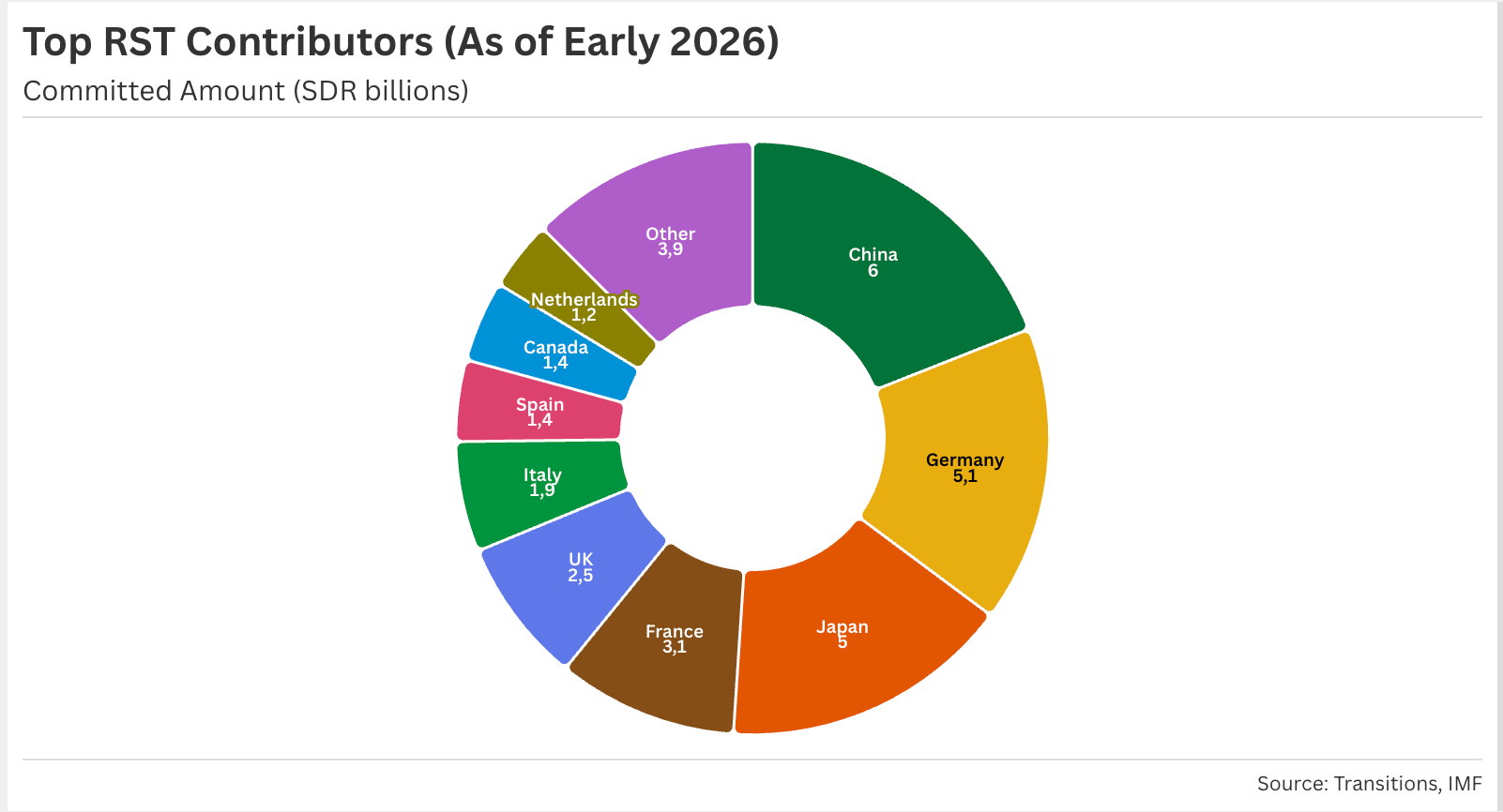
The RST is funded by the “recycling” of surplus Special Drawing Rights (SDRs) from the $650 billion general allocation of August 2021. The capitalization target, set at SDR 33 billion, has been met. Thanks to contributions from China, the EU, and Japan, the fund held approximately SDR 32 to 35 billion by early 2026.
“We expect the IMF to strengthen its surveillance activities and to do so with objectivity and evenhandedness. This work should be focused on macroeconomic and financial stability, rather than other areas beyond the IMF’s expertise like climate and gender.” Scott Bessent, October 2025.
However, the United States has never fulfilled its commitment to transfer SDR 15 billion, as Congress consistently refused to authorize the operation. In May 2025, the U.S. Treasury officially has removed this chapter from the budget request, finalizing the pivot. Unlike the previous year’s report, the document makes no mention of climate or the RST.
The Republican majority in Congress fully supports this “de-greening” strategy. “Under the Biden Administration, the IMF’s management tried to turn the Fund into a ‘World Bank Lite,’ launching initiatives on climate change and social policy. If the Trump Administration wants to pull back on the IMF’s mission creep, it can start by scrapping the Resilience and Sustainability Facility and focusing on the Poverty Reduction and Growth Trust,” stated House Financial Services Committee Chairman French Hill in his opening remarks during the hearing of Scott Bessent on May 7, 2025.
An Uncertain Future
The Center for Global Development (CGD) has noted a “loss of momentum“ in the RST’s operations. “Despite a few large programs in 2025 that absorbed significant financing, it is unlikely that all remaining RSF resources will be utilized by 2026 without adjustments to the facility’s design features,” concluded a report published in October 2025.
While the very existence of the RST is now publicly challenged by the U.S., its governance is being questioned by others. China and the G24 nations have contested the conditionality attached to these loans. To access the facility, countries must typically have a concurrent IMF-supported program with at least 18 months remaining—a requirement seen by some as overly restrictive.
However, a formal overhaul remains unlikely. Any major structural reform requires an 85% supermajority of the total voting power. With a nearly 16.5% share, the United States holds a de facto veto—a privilege it has no intention of relinquishing.
The debate is set to intensify in 2026. The IMF is scheduled to publish a comprehensive review of the facility, while the Independent Evaluation Office (IEO) will release its own report examining the relevance of integrating climate risks into the Fund’s core mandate.