

The US Coal Mirage: An Industrial Twilight
Despite dubious if not desperate efforts to resuscitate the sector, the decline of coal in the United States appears inexorable.

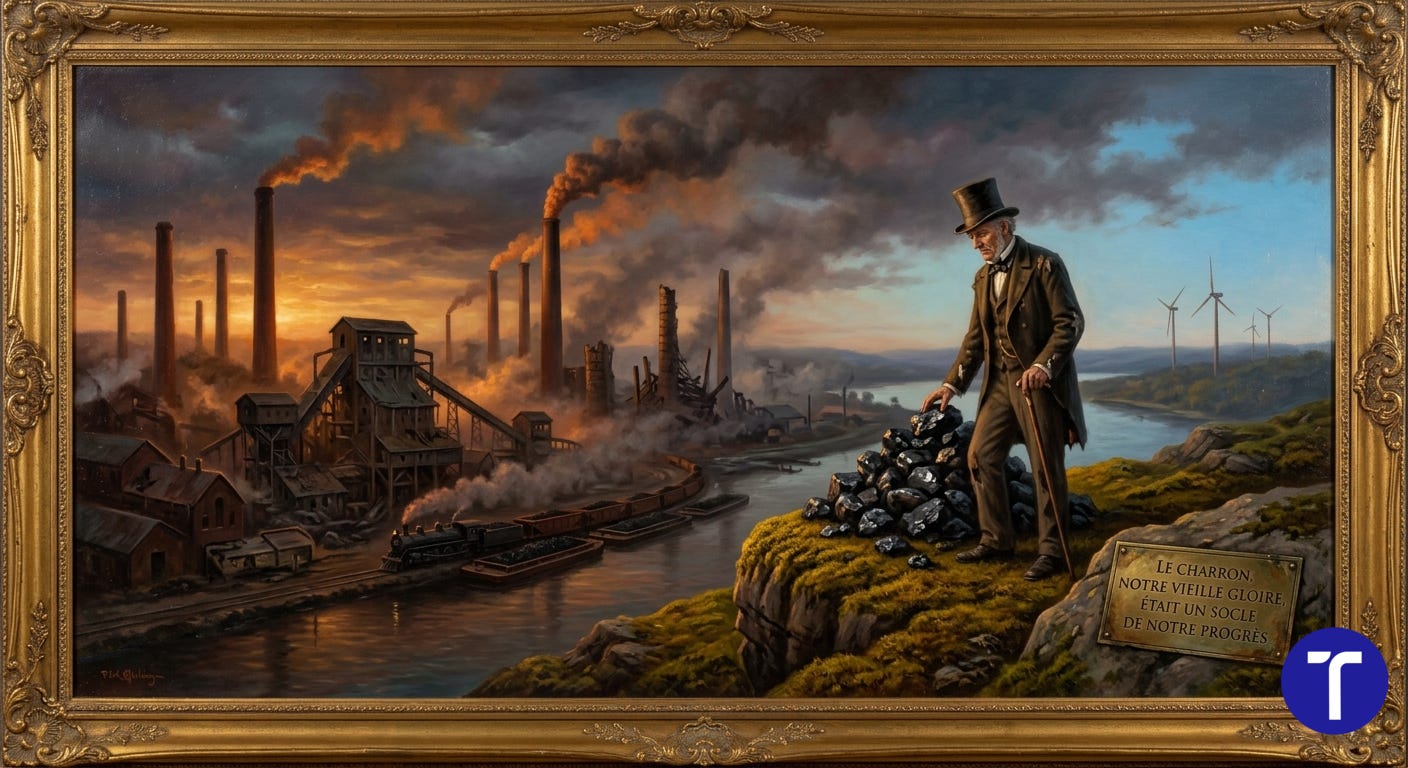
Coal once served as the bedrock of the success of the industrial magnates of the Gilded Age, as depicted by Mark Twain and brought to life in the namesake HBO series.
Yet, the 21st-century Rockfellers and Vanderbilts prioritize decarbonized energy sources. Consequently, since its 2007 peak, coal’s share of the US electricity mix has been in steady decline.
In May 2026, solar energy surpassed coal in the national power mix for the first time on record. “Coal generation hit an all-time monthly low of 39.3 TWh in April 2026. Although coal output rose slightly to 43.4 TWh in May, it remained 11% below May 2025 levels,” Ember wrote in a report published on June 10, 2026.
Despite the underlying assumption of a 3% increase in total electricity demand due to above-average temperatures, the Energy Information Administration (EIA) anticipates that solar production will grow by 19% and wind by 10% for the summer of 2026. Conversely, coal generation is expected to decrease by 2%. This trend is poised to accelerate through the remainder of the year; annual coal consumption is projected to fall 8% to 386 million metric tons, as power operators continue to decommission generating units, according to the FERC (Federal Energy Regulatory Commission).


Regulatory Life Support
The Environmental Protection Agency (EPA) has repealed or eased numerous regulations, most notably the requirements mandating carbon capture and storage (CCS) technologies for plants to remain operational beyond 2032. Consequently, the EPA is effectively reducing operating costs for the fleet and delaying the theoretical retirement date of aging plants.
The administration is also actively intervening on the demand side. A presidential executive order signed on February 11, 2026, directs the Pentagon to enter into long-term power purchase agreements with coal-fired plants to supply “critical“ defense installations.
Furthermore, to prevent planned shutdowns, the Department of Energy (DOE) has invoked Section 202(c) of the Federal Power Act (FPA) since April 2025 to compel the continued operation of aging coal-fired power plants. Originally intended for sudden energy emergencies, this provision is now being used to block the retirement of plants deemed critical to grid reliability. This policy has persisted through 2026, despite mounting controversy and growing litigation. Multiple states, arguing that the DOE is overreaching its mandate, have filed challenges in federal court. Judicial decisions expected by the end of 2026 could establish a decisive legal precedent regarding this policy.
Federal Subsidies and Industrial Reality
Federal support for the sector includes substantial investment programs. A $625 million initiative launched in September 2025 was bolstered by an additional $750 million on June 4, 2026, aimed at extending the lifespan of roughly twenty plants, developing port infrastructure, and financing the construction of two new coal-fired power plants.
These measures have been broadly welcomed by Republican-led states, which remain at the heart of coal production. “I’m really proud to say that today is a stake in the sand for our miners that get up every day, men and women alike who get their dinner bucket, and go out to work, every single day, and oftentimes, they are simply taken for granted,” said U.S. Sen. Jim Justice, R-W.Va., in a statement. West Virginia, the nation’s second-largest coal producer, relies on coal for nearly 90% of its power generation.
The White House projects that this latest program will create 14,000 jobs nationwide and reduce household electricity bills. However, beyond these projections, the industry’s data tells quite a different story.
Groundless Optimism
Despite the assertive policy launched during Donald Trump’s first term, the workforce has continued to erode, falling from 51,000 to 44,000 direct extraction jobs in less than a decade. Furthermore, maintenance costs are trending upward, reflecting a fleet with a median age of 56 years, with the majority of plants exceeding four decades of operation.
The Levelized Cost of Energy (LCOE) for coal is currently two to three times higher than that of utility-scale solar or onshore wind, even when accounting for storage, according to Lazard’s analysis.
While the United States possesses the world’s largest proven coal reserves—estimated at 250 billion metric tons—the coal industry’s persistent loss of competitiveness stands as a concrete illustration of the “stranded assets” theory.
Further readings:
“Why ‘The Gilded Age’ Resonates in 2025,” by Peggy Noonan. The Wall Street Journal, August 2025.
“AI vs. Ideology: When Energy Policy Meets Demand Reality,” by Annick Masounave. Transitions, January 2026.