


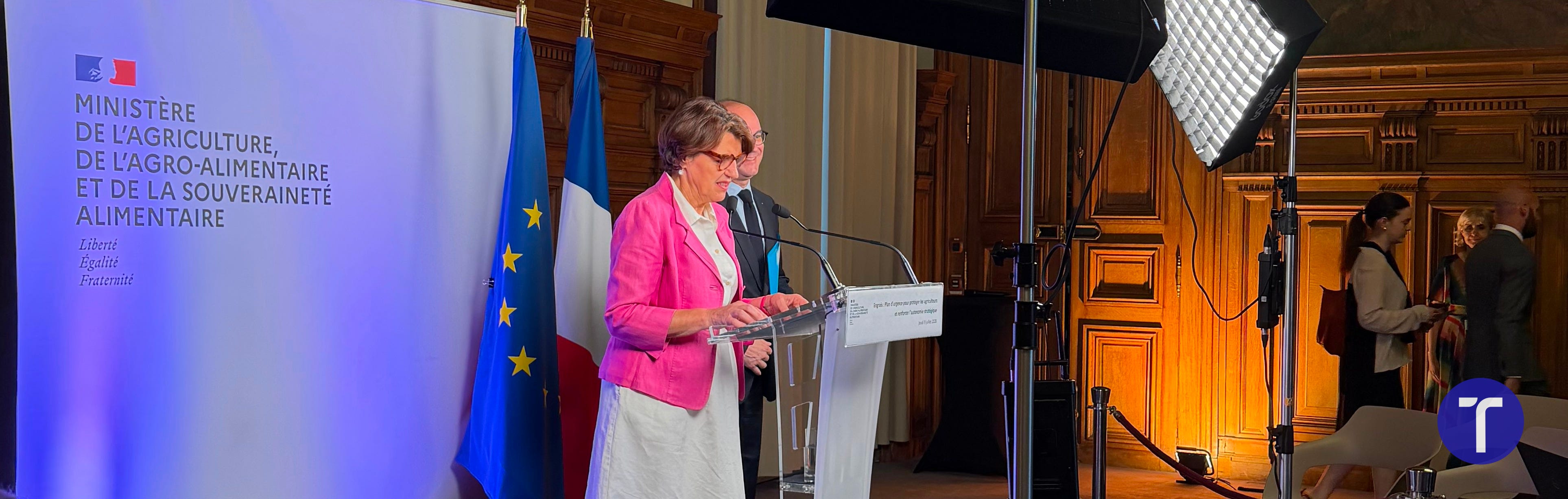
The “Fertilizer Plan” unveiled by the French government on July 9 addresses a dual challenge: mitigating short-term price spikes to secure farm supplies, while engineering long-term strategic autonomy in the country’s agricultural inputs.
Russia’s invasion of Ukraine had already upended international supply chains, underscoring France’s acute exposure to imported fertilizers.
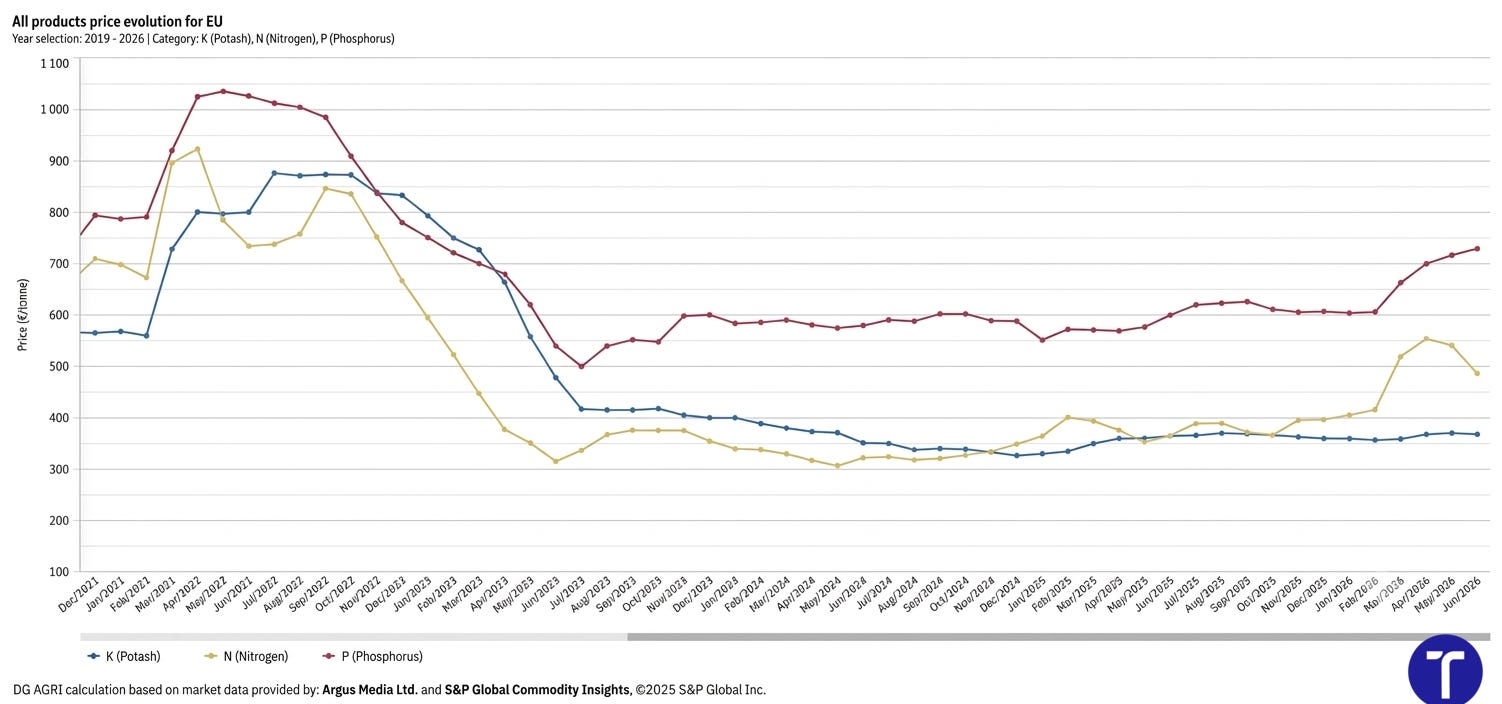
When the blockade of the Strait of Hormuz began in February 2026, French and European farmers initially felt relieved. Anticipating the implementation of the EU’s Carbon Border Adjustment Mechanism (CBAM) on January 1, 2026, they had largely finalized their fertilizer purchases by autumn 2025. However, prolonged uncertainty surrounding this critical trade route - which handles 30% of global nitrogen volumes - now threatens to disrupt procurement for the 2027-2028 season.
Agriculture Minister Annie Genevard delivered a stark assessment of skyrocketing input costs, which remain heavily correlated with global geopolitical instability. She noted that urea prices have surged from €540 to over €800 per metric ton. Meanwhile, ammonium nitrate is trading at €560/t (up from €500), and nitrogen solutions have climbed to approximately €470/t. This sudden inflationary shock represents a severe blow for farmers, many of whom have struggled to earn a viable income over the past three seasons, thereby justifying direct state intervention to subsidize fertilizer procurement.
A €145 Million Mitigation Package
To address immediate liquidity pressures, the Ministry of Agriculture has tasked FranceAgriMer with managing a one-stop-shop portal, set to open on August 1. A total of €145 million will be disbursed to eligible farmers, combining €107 million from the European Commission’s agricultural reserve with additional domestic public funding. The subsidy covers nitrogen fertilizer purchases made between June 1, 2026, and September 30, 2026 - a deadline that will serve as a checkpoint to reassess geopolitical risks in the Middle East.
“France is set to receive 20% of the European Commission’s total €540 million crisis envelope, making our country its primary beneficiary,” Minister Genevard stated.
These immediate measures are paired with structural, mid-to-long-term initiatives. The national “Fertilizer Plan” aligns with the broader European framework presented on May 19 and will soon undergo public consultation. It targets three main objectives: a 50% reduction in fertilizer consumption alongside a 50% increase in domestic production, and the deployment of advanced digital monitoring tools to optimize nitrogen efficiency.
Note: On July 7, the European Parliament voted in favor of supplementary support measures, which currently await final approval from the European Council.
Decarbonization as a Geopolitical Hedge
On the industrial front, the government announced a €2 billion investment package for the domestic fertilizer sector, backed by €620 million in public funding. “Our objective is to cement our strategic autonomy by scaling up the production of low-carbon fertilizers,” declared Sébastien Martin, Minister Delegate for Industry.
“We must systematically stress-test all of our dependencies,” emphasized Annie Genevard, reflecting on her recent diplomatic visit to China, whose strategic autonomy policies she described as inspiring. The Minister warned that France’s food sovereignty is under direct threat from international geopolitical crises, noting that a lack of fertilizers inevitably translates to a collapse in crop yields. From this standpoint, she argued that agricultural production constitutes “a matter of national sovereignty on par with military defense,” describing a nation’s capacities to feed and defend itself as the core pillars of independence.
Further Reading
CBAM and fertilisers: ring-fencing budgets to help farmers reduce their use of mineral fertilisers, Lucille Forgissart, I4CE, January 16, 2026.
[In French] Qui sème la guerre ne sème guère les engrais, Hayet Afou, French Directorate-General of the Treasury (DG Trésor), March 13, 2026.